Why Full Stack Development is the Future of Modern Engineering
Published on: December 25, 2026
In the ever-evolving world of technology, full stack development has emerged as the backbone of digital innovation. Whether you are a startup founder or an enterprise leader, the value of a skilled full stack developer cannot be overstated.
But what exactly makes this discipline so critical in 2025, and why should aspiring engineers strive to master it? This post dives deep into the layers of the stack and the unique perspective that defines a true full stack expert.
Understanding the Layers
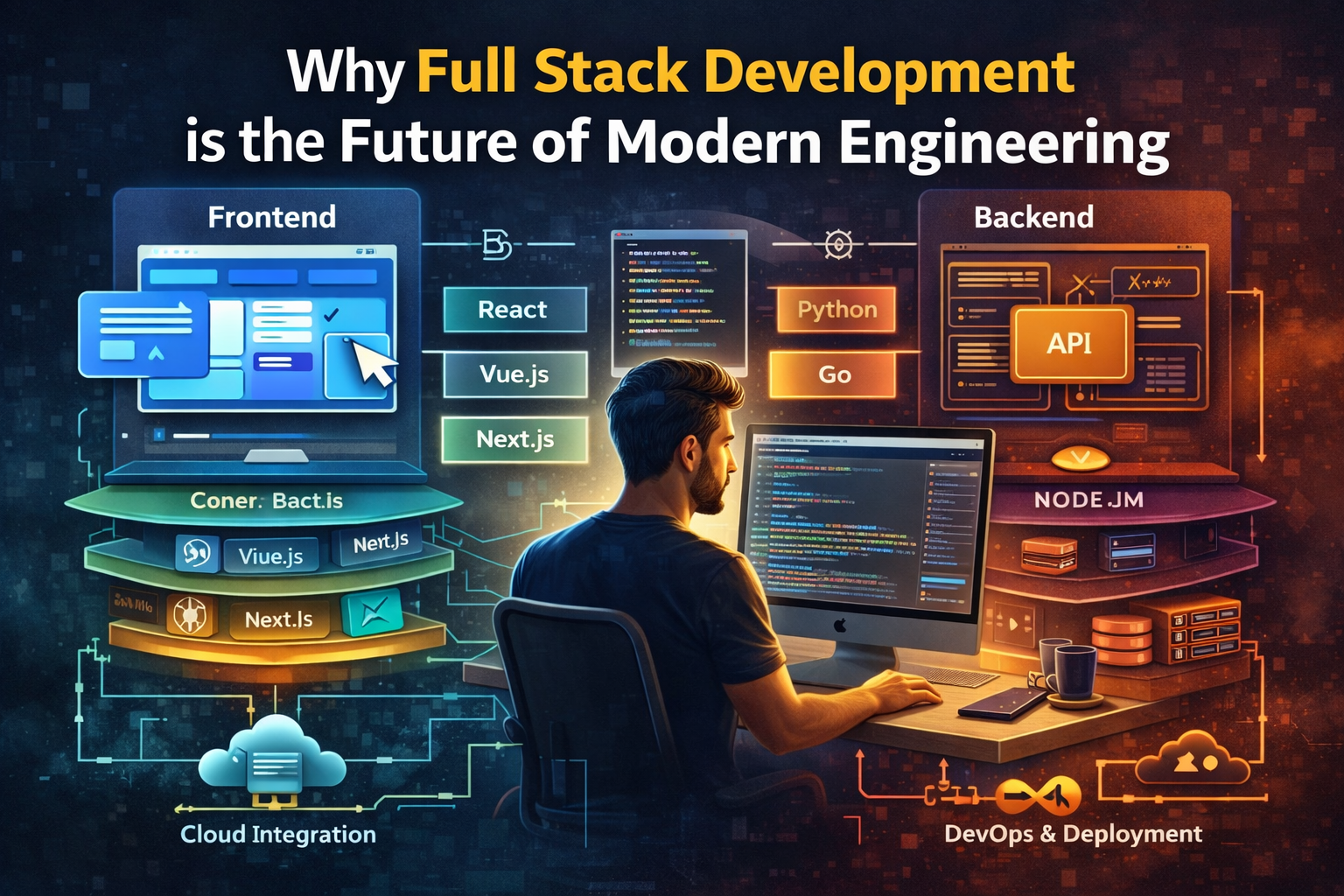
At its core, full stack development involves the mastery of both the frontend (client-side) and the backend (server-side) of an application. A full stack developer is someone who can navigate the entire journey of a request—from the moment a user clicks a button on a stylish UI to the second that data is securely stored in a complex database.
For a developer, the day-to-day work involves:
- Frontend Excellence: Crafting responsive interfaces using frameworks like React, Vue, or Next.js.
- Backend Robustness: Building scalable APIs and server logic using Node.js, Python, or Go.
- Database Management: Designing schemas in SQL or NoSQL environments.
- DevOps and Deployment: Ensuring the lifecycle is completed with seamless cloud integration and CI/CD pipelines.
The Strategic Edge
The primary advantage of a full stack developer is the ability to see the "big picture." While specialized developers focus on one niche, a full stack developer understands how a change in the database schema affects the frontend state management. This holistic view reduces communication silos and speeds up the development process.
In a fast-paced market, companies prioritize this approach because it allows for rapid prototyping. A single developer can build a Minimum Viable Product (MVP) from scratch, handling the architectural design, the API integration, and the final CSS styling. This efficiency is why the demand for versatile developers continues to grow.
Essential Tools for 2025
To stay competitive, a modern developer must be proficient in a variety of tools. The "stack" usually refers to a combination of technologies like the MERN stack (MongoDB, Express, React, Node) or the PERN stack (PostgreSQL, Express, React, Node).
However, being a great full stack developer is about more than just knowing a language; it’s about understanding the philosophy:
- Versatility: Switching between high-level UI logic and low-level server performance effortlessly.
- Efficiency: Using frameworks that bridge the gap between frontend and backend, such as Next.js or Remix.
- Problem Solving: A full stack developer is essentially a universal fixer, capable of debugging a CSS glitch or a database deadlock with equal skill.
Conclusion: The Evolving Role
As AI continues to automate basic coding tasks, the role of the developer is shifting toward system architecture and complex integration. The modern full stack developer is no longer just a "coder"—they are a product architect. By mastering the full stack, you position yourself at the center of the tech industry, equipped with the tools to build anything you can imagine.
If you are looking to start your journey, remember that the best developers are lifelong learners. The world of tech moves fast, but for those who love to build, there is no more rewarding career.